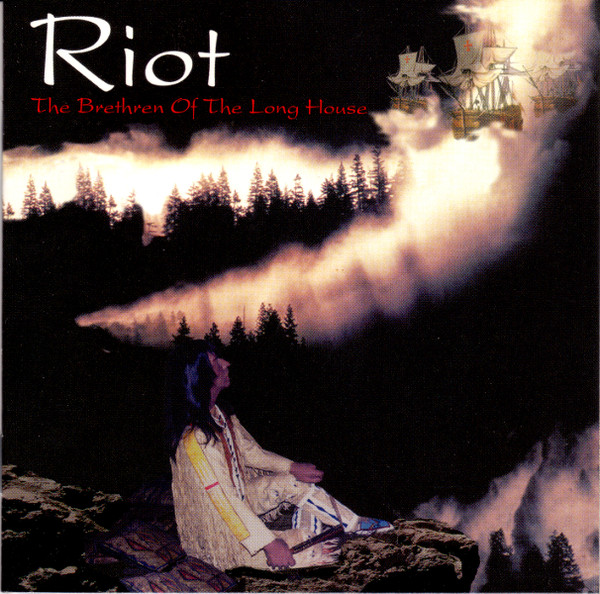
Released during a defining yet turbulent period for Riot, The Brethren of the Long House stands as one of the band’s most emotionally profound and conceptually powerful albums. While Riot was often known for high-energy heavy metal, fast guitar runs, and soaring vocals, this album revealed a deeper layer — a project centered on history, injustice, and the voices of a people whose story resonated with Mark Reale on a spiritual level.
The Brethren of the Long House is a conceptual work inspired by the struggles, spirituality, and tragic fate of the Native American tribes, particularly the Iroquois Confederacy (also known as the Haudenosaunee, or “People of the Longhouse”). Through the album, Reale explores themes of betrayal, cultural destruction, pride, and resilience — issues that mirrored Riot’s own battles for survival and recognition.
Riot crafted an album rich in atmosphere, storytelling, and musical dynamics.
The Brethren of the Long House is based on the tragic historical narrative of Native American tribes, especially the Iroquois, whose once-flourishing culture suffered under centuries of colonization and oppression. The “Long House” is symbolic — not only the literal Iroquois communal structure but also a metaphor for unity, heritage, and spiritual endurance.
Mark Reale was deeply moved by indigenous themes of: respect for nature, community and brotherhood, the loss of homeland, betray and broken promises and the fight to preserve identity
The album follows no strict chronological storyline but instead presents musical chapters reflecting both historical events and emotional states — grief, anger, pride, hope, and remembrance.
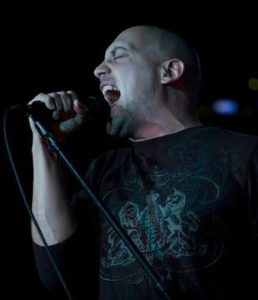
A powerful, melodic opener dealing with the universal tragedy of war — but with undertones of Native American warriors defending their land and people. Strong, emotional vocals by DiMeo.
The title track sets the conceptual foundation. Atmospheric, dramatic, and rooted in storytelling, it invokes the unity and spiritual strength of the Iroquois nations.
A soulful track expressing grief for a destroyed way of life — one of the album’s emotional centers.
A heavy, tense composition symbolizing early contact with European settlers, foreshadowing betrayal and tragedy.
One of the band’s most uplifting tracks, blending sorrow with hope. Its melodies reflect the longing for freedom and dignity.
Named after the legendary Native American healer. A fast, aggressive track capturing the ferocity of resistance and the spirit of rebellion.
A short, atmospheric instrumental portraying nature, cleansing, and spiritual reflection — a quiet but powerful interlude.
One of the most historically direct songs on the album, referencing the 1890 massacre at Wounded Knee. A heartbreaking track filled with sorrow and anger.
Expresses the sacred bond between indigenous people and their ancestral lands. Mid-tempo, emotional, and lyrically intense.
A cinematic, dramatic instrumental inspired by James Fenimore Cooper’s novel. Riot’s version feels like a musical tribute to the fading legacy of a people.
Riot’s interpretation of the classic American folk song — melancholy and beautiful, fitting perfectly into the album’s themes of longing and loss.
A melodic hard-rocking track that maintains the era’s musical style but sits outside the concept. Included originally for the Japanese edition.
Musically, The Brethren of the Long House explores a range of moods:
Heavy metal power and precision
Cinematic, atmospheric passages
Acoustic folk influences
Deep emotional vocals and melodic storytelling
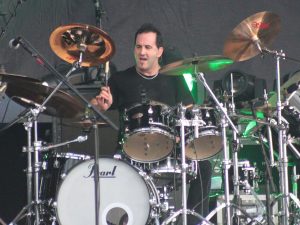
Reale and Flyntz deliver some of their most expressive harmonized guitar work, while DiMeo’s warm, soulful tone captures the album’s emotional weight. John Macaluso’s drumming adds technical flair and intensity.
This is one of Riot’s most human albums — a tribute album in spirit, a concept album in structure, and a passionate statement about injustice and perseverance.
Drum line up
According to the official album lineup, the primary drummer for The Brethren of the Long House was John Macaluso, who handled the majority of the drum tracks on the record.
Bobby Jarzombek is credited as an additional/session drummer on the album, performing on tracks 1, 4, 12, and 13.
This means that Jarzombek does not appear on all songs, but only on specific ones, fully in line with the documented album credits.
During the recording period, the band underwent a change in the drum position.
John Macaluso had taken over as the main drummer for the album, while Bobby Jarzombek contributed only as a guest/session musician on selected tracks.
This was likely a creative or production decision — not an oversight.
It represents a combination of the current lineup and guest contributions:
Macaluso played the core of the album’s material, while Jarzombek, a former member and highly recognizable drummer, was brought in for certain songs.
This arrangement allowed the band to maintain continuity with the new lineup while still keeping a connection to Jarzombek’s earlier involvement in Riot. In a way, his participation acts as a bridge between the band’s previous era and this chapter of its history.
Over time, The Brethren of the Long House has earned a respected place in the Riot catalogue. Fans of the DiMeo era often call it:
their most heartfelt album
their most atmospheric album
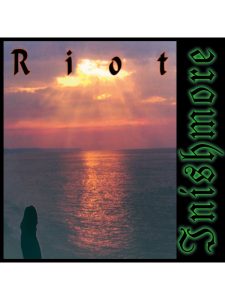
a spiritual predecessor to Inishmore
It marks the beginning of Riot’s exploration of historical and cultural themes that would fully blossom with Inishmore.
A powerful, emotional, and musically rich chapter in the Riot legacy — guided by the heart, vision, and storytelling of Mark Reale.
Shine on.
Addional players:
Bobby Jarzombek-drums on Holy land, Rain, The last of Mohicans/Mohicans reprise.
Steve Loeb, Kevin Dunne, Phill Mangalanaous ands Steve Briody- strings and orchestration
Steve Loeb-Hammond organ and backing vocals
David L. Speir of the Brass art collcetive-trumpet
Recorded at Greens Street recording, Soho, N.Y.C. Januaruy-June 1995
Executive producer-Steve Loeb
Produced by Steve Loeb, Rod Hui and Mark Reale for Fire Sign Ltd.
Additional engineers-Danny Modorsky, Phil Painson and Josh Wertheimer
Used in production-Gibson guitars, Vic Firth sticks, Demario Guitars, Fender guitars, Ovation Guitars, GHS strings, Marshall Gibson Lab series and Ampeg ampflication
Cover design by John Macaluso
Artwork inspired by the song 'Santa Maria'
Special thanks to Dave Harrington