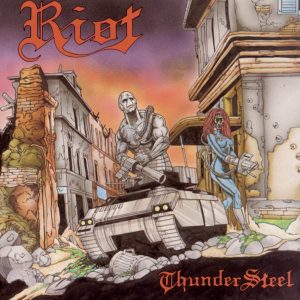
Released on February 14, 1990, The Privilege of Power is Riot’s seventh studio album and one of the boldest statements in their 50-year legacy. After reigniting their career with Thundersteel, the band refused to simply repeat themselves. Instead, they created one of the most adventurous, experimental, and cinematic records in metal history — blending classic U.S. power metal with horn sections, brass ensembles, TV and radio samples, interludes, and a semi-conceptual flow.
It remains an album that divides opinions but commands respect. For many fans, it is a masterpiece of ambition.
The album features the same heroic lineup that redefined Riot in 1988:
Tony Moore – vocals
Mark Reale – guitars
Don Van Stavern – bass
Bobby Jarzombek – drums
After the triumph of Thundersteel, this lineup felt energized and fearless. Mark Reale envisioned a record that pushed beyond the boundaries of conventional metal. His idea was to fuse the aggression of speed/power metal with a broader, more colorful palette — brass sections, big band accents, atmospheric sound effects, and narrative transitions.
The goal was not to abandon metal, but to expand it.
Recording: December 1988 – September 1989
Studio: Greene St. Recording, New York City
Producers: Steve Loeb, Vince Perazzo, Rod Hui, and Mark Reale
Label: Released by a major label in early 1990
The sessions were long, complex, and layered. Riot recorded not only their usual instrumentation, but also:
horn sections
guest brass players with backgrounds in jazz, funk, and soul
cinematic atmospheric sound design
TV/radio broadcast snippets
interludes that connected songs into a conceptual experience
The band believed they were creating something ahead of its time — metal with the energy of a movie soundtrack.
The Privilege of Power mixes:
Fast riffs, soaring vocals, and explosive drumming remain at the core.
These were not samples but real musicians — giving tracks a unique flavor rarely heard in heavy metal.
The songs are tied together by scenes, broadcasts, and atmospheric noises that build a cinematic storyline.
The album touches on media influence, violence, corruption, and personal struggle — deeper topics than typical metal releases of the era.
Because of its experimental nature, the album received mixed reactions at the time but is now respected as one of the boldest moves in Riot’s history.
“On Your Knees” opens the record with dramatic samples and an explosive speed-metal assault — setting the tone for a different kind of Riot album.
“Metal Soldiers” carries a commanding mid-tempo groove, a powerful anthem fueled by Tony Moore’s high-flying vocals.
“Runaway” blends atmosphere and melody, showing the band’s willingness to explore emotional contrasts.
“Killer” is one of the album’s most daring moments, combining horns, shifting moods, and a dramatic narrative of violence and fear.
“Dance of Death” returns to blistering speed metal — a showcase of Jarzombek’s extraordinary drumming.
“Storming the Gates of Hell” and
“Black Leather and Glittering Steel” offer pure metal intensity for fans of Riot’s harder edge.
“Maryanne” reveals the band’s melodic sensibilities with a more rock-driven approach.
“Little Miss Death” blends darkness and hook-driven writing, one of the album’s standout tracks.
“Racing with the Devil on a Spanish Highway (Revisited)” closes the album with a bold reinterpretation of the Al Di Meola fusion classic — proving Riot could blend technicality, creativity, and genre-bending fearlessness.
When the band prepared to tour The Privilege of Power, the complexity of the album required additional musicians, especially for live performances. This period became a major turning point in Riot’s lineup.
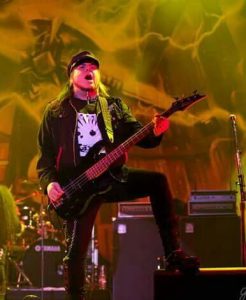
With bassist Don Van Stavern stepping away from the band shortly before the touring cycle, Riot recruited Pete Perez, a powerful, versatile bassist who quickly became a key figure in the next era of Riot. His playing brought stability and low-end strength to the demanding shows.
For the first time, guitarist Mike Flyntz joined Riot as a live guitarist to reproduce the dual-guitar arrangements on stage. His chemistry with Mark Reale was immediate.
This tour marked the birth of the Reale–Flyntz guitar partnership — a duo that would define Riot for decades to come.
After the tour, Mike Flyntz officially became a full member of Riot.
Don Van Stavern’s departure at this time was the result of:
creative differences caused by the highly experimental direction
personal and professional commitments outside Riot
exhaustion from the intense production cycle
the logistical difficulties of performing the album live, which was far more complex than Thundersteel
Although he left during this period, Don would return many years later and remains one of the most beloved members in Riot’s history.
While the album showcased Moore’s incredible range and dramatic presence, its ambitious direction, combined with the pressures of touring and the band’s internal changes, ultimately led Tony Moore to leave the band after the touring cycle.
His exit marked the end of one of Riot’s most exceptional vocal eras — a voice that brought the band into new dimensions.
The Privilege of Power stands today as:
one of the most innovative metal albums of its generation
a rare fusion of horns, metal, and cinematic storytelling
the closing chapter of the Thundersteel/Privilege lineup
the starting point of the Mike Flyntz era
a cult classic for fans who appreciate experimentation and ambition
It remains a bold reminder that Riot was never afraid to take risks — and that their creativity often pushed far beyond the borders of traditional metal.