Tony Moore is a vocalist whose career has always carried a sense of intensity, ambition, and unmistakable charisma. Long before he ever stepped onto a stage with Riot, he had already built a reputation as a singer with a natural upper-range power and a dramatic sense of phrasing — qualities that made him stand out in the American metal scene of the mid-1980s. Moore was never just a “high-note” singer; he was a storyteller, someone who could take complex melodies and drive them with emotion and clarity.
Tony Moore entered the world of Riot during a major turning point for the band. Mark Reale, the group’s founder and creative heart, wanted to rebuild Riot’s sound for a new era — heavier, faster, and more ambitious than anything they had done before. Moore’s voice was the missing piece.
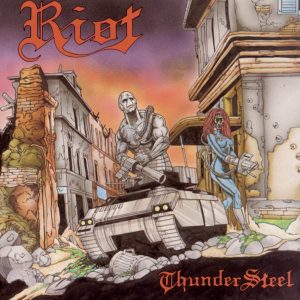
He joined Riot around 1986/87 when the “Thundersteel” lineup was forming. From the moment he recorded his first demos with Reale, the chemistry was obvious. His soaring vocals matched perfectly with the band’s new power-metal direction. The resulting album, Thundersteel (1988), is now considered one of the defining classics of American power metal. Moore’s performance on tracks like “Thundersteel,” “Flight of the Warrior,” and “Bloodstreets” gave the band a renewed identity — bold, melodic, and unapologetically powerful.
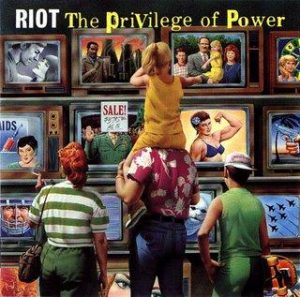
Moore continued with the band through The Privilege of Power (1990), an album that pushed Riot into even more adventurous territory with complex arrangements and aggressive songwriting. Although the album showcased some of Moore’s most impressive vocal work, the period was challenging. Changes in the metal landscape, record-label issues, and personal paths shifting in different directions led to Moore stepping aside from the group in the early 1990s.
His departure felt sudden for fans, but for Moore it was part of a natural cycle — closing one chapter before it lost its spark and allowing Riot to move forward in their own way.
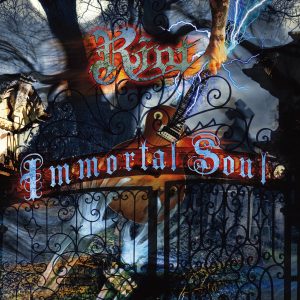
Two decades later, something remarkable happened. Mark Reale reached out and invited Moore to return for a reunion of the Thundersteel lineup. Moore accepted, not as an attempt to relive the past but to honor what Riot had built together. This reunion became the Immortal Soul (2011) album — a record filled with energy, pride, and emotional weight.
Moore sounded revitalized, almost untouched by time. His reunion with Reale and the band carried a sense of unfinished business — a chance to show that their chemistry still burned brightly. Immortal Soul became a powerful farewell to an era, especially since it was the last Riot album that Mark Reale worked on before his passing.
After Reale’s passing, the future of Riot became uncertain. The band eventually continued as Riot V, keeping the spirit alive with a new vocalist. Moore chose not to continue with the post-Reale lineup, feeling that his chapter with Riot was deeply tied to Mark’s presence, vision, and friendship. His departure was respectful and without drama — simply an artist understanding when his personal story with a band had reached its natural conclusion.
Tony Moore’s time in Riot may not span decades, but the impact is undeniable. He fronted two of the most important eras in the band’s history, bringing a unique voice and intensity that helped define Riot’s identity across generations. His work with Mark Reale remains one of the cornerstones of American power metal — emotional, technical, and full of spirit.
Moore’s voice is forever linked to the sound of Riot’s rebirths — first in the late ’80s, and again in Immortal Soul. His legacy isn’t just about high notes; it’s about vision, passion, and the rare kind of vocal storytelling that stays with listeners long after the final chorus fades.
• Mid-1980s – First Contact with Riot
Mark Reale begins reshaping Riot’s sound and looks for a high-range vocalist with character and precision. Moore’s voice immediately stands out.
• 1986/1987 – Officially Joins Riot
Moore becomes the new frontman for the reborn power-metal lineup that will create Thundersteel.
• 1988 – Release of Thundersteel
A landmark album. Moore’s vocals define the new era of Riot and turn the band into a respected name in power metal worldwide.
• 1990 – Release of The Privilege of Power
Moore delivers some of his most technically impressive performances. After touring and internal pressures, he parts ways with Riot in the early ’90s.
• 2010 – Reunion of the Thundersteel Lineup
Mark Reale reaches out to Moore for a full reunion. Moore accepts, bringing his voice back to Riot after two decades.
• 2011 – Release of Immortal Soul
Moore’s return is met with huge enthusiasm. His voice sounds powerful and mature, proving that the chemistry with Reale is still alive.
• 2012 – End of Cooperation After Mark Reale’s Passing
Following Mark’s death, Moore decides not to continue with Riot V. His chapter with Riot ends with respect and a sense of completion.
Tony Moore’s place in Riot’s history is unique — not defined by the number of years but by the intensity he brought every time he stepped to the microphone. He wasn’t just the voice on Thundersteel or Immortal Soul; he was the spark that helped transform Riot into a world-class power-metal force.
His vocals carried a dramatic fire: a sharp edge when the songs needed intensity and a smooth, emotional clarity during the band’s more reflective moments. Moore never imitated trends. He sang with conviction, with the kind of focus that comes from understanding both the weight of the lyrics and the energy of the band behind him.
His return for Immortal Soul showed that true chemistry never fades. Even after decades apart, Moore sounded renewed, confident, and deeply connected to the legacy he had helped build. And when Mark Reale passed away, Moore chose integrity — stepping away rather than continuing without the bandmate who had first believed in his voice.
Tony Moore’s legacy in Riot is built on heart, talent, and authenticity. He is a vocalist who left a permanent mark on the band’s history and on the fans who still feel the power of his performances. His contribution remains a reminder that sometimes one voice can define entire eras — and Tony Moore did exactly that.