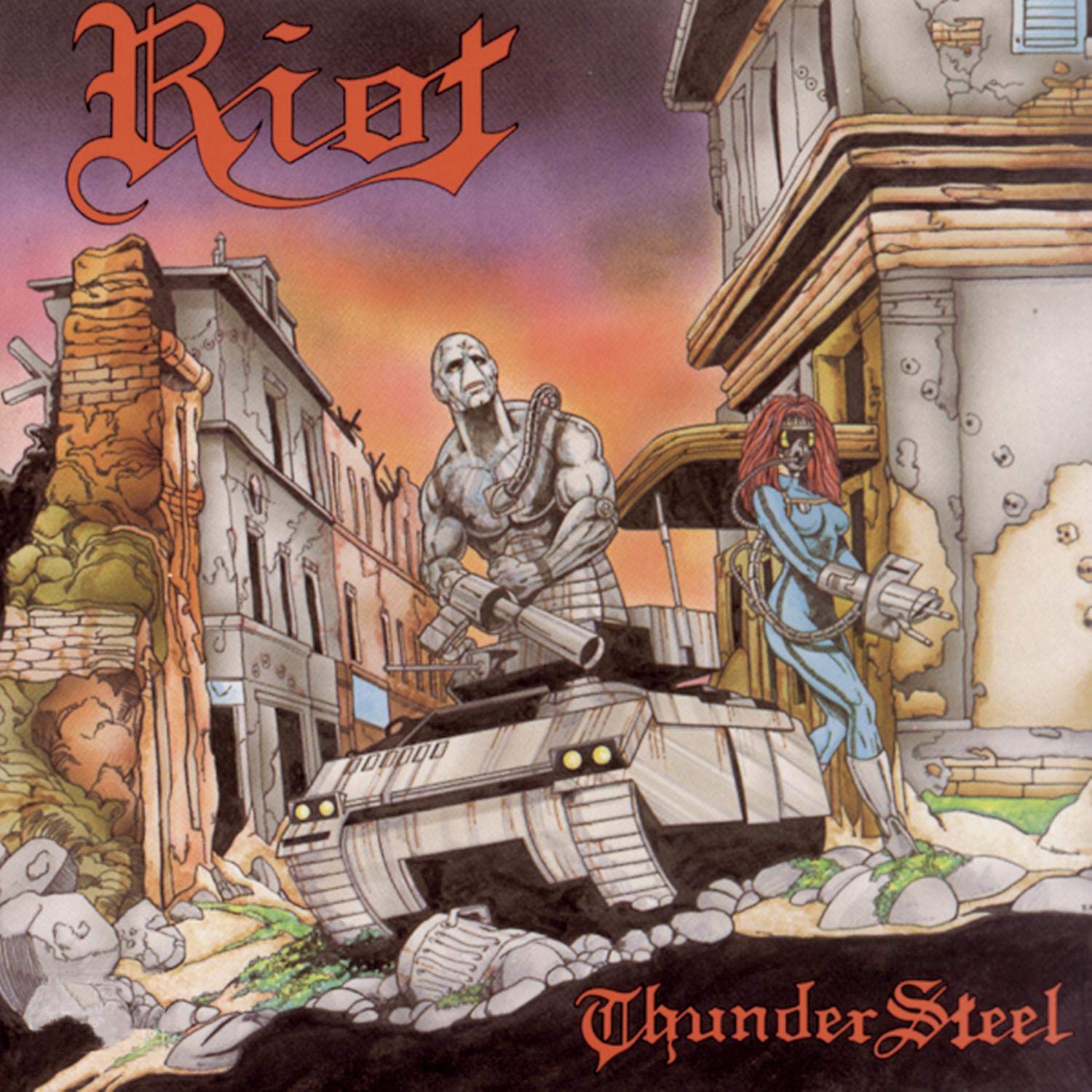
Thundersteel, released on March 24, 1988, marks one of the most significant turning points in Riot’s history. After several years of inactivity, lineup changes, and musical uncertainty, founding guitarist Mark Reale set out to completely revitalize the band. The goal was ambitious: to take Riot into a faster, heavier, and more aggressive musical direction while preserving the essence of the band’s identity.
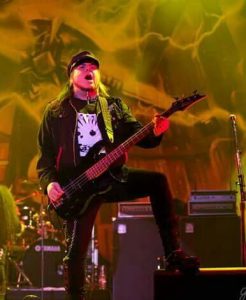
This era introduced a nearly all-new lineup: Tony Moore on vocals, Don Van Stavern on bass, and Bobby Jarzombek on drums. Reale’s vision was to merge technical precision, high energy, and melodic sensibility into a coherent, explosive sound — a fresh Riot for the late 1980s metal scene.
Finding the right vocalist was critical for this transformation. Riot needed someone who could handle high-pitched, clean, yet powerful vocals to complement the faster, heavier sound. Many candidates came and went, but Tony Moore — then relatively unknown — stood out immediately.
Moore had experience as a musician and vocalist, and his voice offered both range and intensity. After a series of auditions and demo recordings, it became clear that he was not just a fit but a catalyst for the band’s rebirth. His high, soaring vocals brought a fresh, modern energy while still honoring the melodic elements Riot was known for.
Moore’s arrival did more than fill a vocal slot; his interpretation of songs and personal style shaped the band’s approach to the new material. The synergy between Moore, Reale, Van Stavern, and Jarzombek became the foundation for what would become a landmark album in American power and speed metal.
Mark Reale – guitar, founding member, creative leader
Tony Moore – vocals, new voice of the band
Don Van Stavern – bass, brought stability and melodic grounding
Bobby Jarzombek – drums, delivering speed, precision, and technical prowess
Van Stavern and Jarzombek’s contributions were crucial in enabling Reale and Moore to fully realize their musical vision. Their tight, energetic rhythm section allowed the guitars and vocals to soar, giving Riot a new-found intensity and technical edge.
Thundersteel was recorded in January 1988 at Greene St. Recording, New York City. Production was led by Mark Reale, Steve Loeb, and Rod Hui, giving the band direct influence over the album’s sound.
The production style emphasizes clarity, punch, and power. Twin guitars are layered with precision, drums hit hard with clean attack, and the bass lines drive the melodies forward. Moore’s vocals were captured to highlight both their melodic clarity and their raw metal energy.
The album was released via Quality Records in the United States and ZYX Music in Europe, solidifying Riot’s comeback with a strong, professional presentation.
Thundersteel represents a shift in Riot’s musical identity. Moving away from the traditional heavy metal and hard rock of previous albums, it embraces:
Speed metal intensity: fast, intricate riffs and rapid drumming
Power metal melodies: soaring choruses and harmonic twin-guitar leads
Thrash and underground energy: raw aggression without losing technical precision
The album’s style was influential, inspiring contemporaries and future metal bands. Some sources even suggest that Thundersteel influenced Judas Priest in the making of their Painkiller album.
“Thundersteel” – The title track is a blazing opener that sets the tone. Fast riffs, double bass drums, and Moore’s high vocals immediately announce the band’s return with a vengeance.
“Fight or Fall” – Aggressive yet slightly slower, emphasizing rhythm, riffs, and Moore’s commanding delivery.
“Sign of the Crimson Storm” – Dark and atmospheric, blending speed and melody to show the band’s dynamic range.
“Flight of the Warrior” – Anthemic and melodic; showcases the twin guitars and new lineup’s chemistry.
“On Wings of Eagles” – A soaring, uplifting power-metal track with a memorable chorus and epic feel.
“Johnny’s Back” – Punchy, riff-driven, with rock-metal influences; adds variety and energy to the album.
“Bloodstreets” – Dark, intense, and raw; combines heavy guitars, driving bass, precise drumming, and emotive vocals.
“Run for Your Life” – Pure speed-metal adrenaline; designed to explode live with energy.
“Buried Alive (Tell Tale Heart)” – Nearly nine minutes of epic composition; dramatic dynamics, melodic passages, and technical mastery close the album powerfully.
Together, the tracks form a cohesive journey through speed, melody, aggression, and technical skill, defining a new era for Riot.
Thundersteel is widely considered Riot’s most iconic album and a milestone in American power and speed metal. The album proved that even after nearly a full lineup change, Riot could produce legendary, technically masterful, and emotionally charged music.
Tony Moore’s vocals were a defining factor. His range, clarity, and energy gave life to the songs, elevating the album beyond mere technical proficiency. The contributions of Van Stavern and Jarzombek provided the backbone for the new sound, allowing Reale to fully explore guitar melodies, solos, and harmonies.
The album solidified Riot as a major influence on the late-80s metal scene, inspiring future bands and leaving an enduring mark on the genre. Today, tracks like “Thundersteel” and “Flight of the Warrior” are considered timeless metal anthems, and the album itself is celebrated as a rebirth of Riot’s legacy, both musically and culturally.