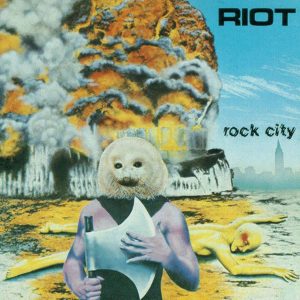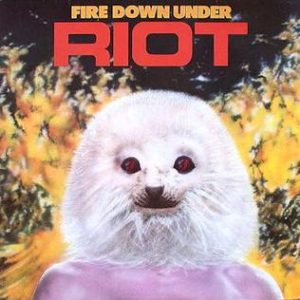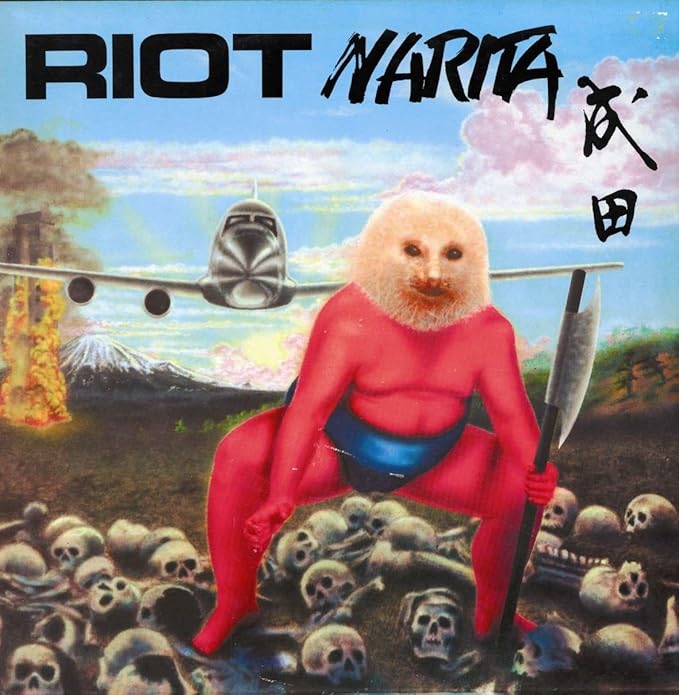
Narita is the second studio album by New York heavy metal band Riot, released in 1979—a crucial turning point that captured the group evolving from raw 1970s American hard rock toward the sharper, faster, and more metallic sound they would later perfect. While their debut Rock City introduced Riot as an energetic underground force, Narita is where the band truly found its identity: louder, heavier, more ambitious, and unmistakably unique.
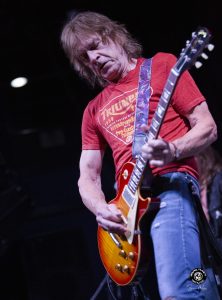
The album firmly sits between hard rock and early heavy metal, often labeled “proto-metal” due to its aggressive guitar work, high-energy rhythmic drive, and flashes of speed that foreshadow the power metal movement of the 1980s. Compared with Rock City, Narita is tougher and more muscular—this is where Riot steps confidently into metal territory. The arrival of guitarist Rick Ventura created the signature dual-guitar attack alongside founding member Mark Reale, forming a partnership that greatly elevated the band’s depth, harmony writing, and technical prowess. Their synchronized leads, melodic phrasing, and fiery interplay define much of the album’s character.
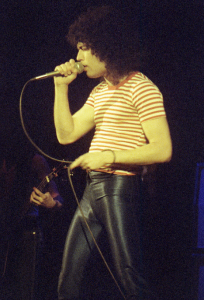
Frontman Guy Speranza delivers one of his greatest performances here. His high, crystal-clear voice—with its combination of youthful enthusiasm, melodic clarity, and rock grit—gives Narita a powerful emotional core. Few singers of the era could match the mix of purity and intensity he brought to Riot’s music.
Despite its heavier approach, the album still retains the blues-driven roots of American hard rock. You can hear touches reminiscent of UFO, Montrose, and Blue Öyster Cult, yet with an unmistakable New York edge. At the same time, tracks like the instrumental “Narita” already hint at the future—at Fire Down Under, at Thundersteel, and at the entire U.S. power metal sound Riot helped pioneer.
Narita was produced by Steve Loeb and Billy Arnell for Fire Sign Ltd., and recorded at The Big Apple Recording Studios, Green Street, New York City, with Jim Jordan as recording engineer and Roddy Hui handling the mixing. The album’s production is raw yet clear—a punchy, unpolished sound that captures Riot’s youthful fire. The guitar tones bite, the rhythm section hits hard, and Speranza’s vocals cut straight through the mix.
The visual side of the album was also notable. The cover painting was created by Steve Weiss of Achme Productions in San Francisco, while the back-cover photography was shot by Bob Gruen, capturing the band’s energy during a performance at the Municipal Auditorium in San Antonio, Texas.
Narita opens with “Waiting for the Taking,” a vibrant and confident statement of intent. It blends melodic, almost pop-rock sensibilities with a thick metallic guitar sound, and instantly showcases the chemistry between Reale and Ventura. The song’s soaring chorus and blazing solo set the tone for what’s to come.
“49er” follows with a blues-tinged, driving boogie rhythm. The guitars carry a heavier punch, pairing storytelling lyrics about American frontier life with a gritty, muscular riff. It’s classic late-70s hard rock, but delivered with Riot’s unmistakable intensity.
With “Kick Down the Wall,” the band moves into thicker and darker territory. The track is mid-tempo but heavy, built around a massive chord progression and a powerful chorus designed for live crowds. Many fans and critics have noted shades of Black Sabbath or Montrose in its pounding riff and deep groove.
Riot’s cover of “Born to Be Wild” pays tribute to one of the earliest proto-metal anthems. Instead of copying Steppenwolf’s original, Riot speed it up, sharpen the guitars, and inject their own high-octane energy—turning it into a bridge between classic rock and early speed metal.
The centerpiece of the album is the instrumental “Narita.” This track is essential not only to the album but to Riot’s entire legacy. With its rapid tempo, harmonized dual-guitar leads, fluid solos, and almost heroic sense of melody, “Narita” is an early template for what would later become the U.S. power metal sound. Fans often cite it as the moment Riot “discovered” their future.
“Here We Come Again” is a melodic, uplifting hard-rocker that highlights Speranza’s voice, while the guitars weave intricate bridges and harmonies underneath. It is one of the album’s hidden gems, celebrated by fans for its anthemic charm.
“Hot for Love” begins with a slow, atmospheric introduction before erupting into one of the heaviest songs on the album. The track pushes into proto-speed-metal territory near the end, even including playful (and unexpected) vocal sound effects during the guitar solo. It’s raw, wild, and full of energy.
“White Rock” is short, rebellious, and punchy—driven by loud bass, thick guitar chords, and a youthful punk-meets-metal attitude. Despite its brevity, it carries a lot of character.
Finally, “Road Racin’” closes the album with one of the band’s all-time classics. Built on heavy riffs, sharp vocals, and soaring twin-guitar leads, the song already hints strongly at the direction Riot would take on Fire Down Under. Its heroic, galloping style later influenced U.S. power metal acts like Brocas Helm and remains one of the band’s most loved live staples.
Narita is more than just Riot’s second album—it’s the key bridge between their 1970s hard-rock roots and the legendary, full-metal identity they would embrace in the ’80s. Tracks like “Narita” and “Road Racin’” became foundational to U.S. heavy metal and even found new life decades later when featured in the video game Brütal Legend.
This album marked the moment Riot elevated themselves from an underground New York act to a pioneering force in American metal—setting the stage for masterpieces like Fire Down Under and for the future rise of the Thundersteel era.
The songs "Narita" and "Road Racin'" are featured in the video game Brütal Legend.
Produced by Steve Loeb and Billy Arnell for Fire Sign Ltd. Recorded at The Big Apple Recording Studios, Ltd.., Green Street New York City
Redordist : Jim Jordan Mixing Engineer: Roddy Hui Cover Paining: Steve Weiss, Achme Productions, San Francisco Ca Art Direction:Marcia Loeb
Back cover Photographie : Bob Gruen (courtesy Municipal Auditorium, San Antnoni, Texas)